From race-day nerves
to a clearer opening plan.
When “what if?” takes over, bring your attention back to the part of the race you can actually influence.
Read the article ↗PICTURE WHAT YOUR RUNNING COULD BECOME
Imagine standing at the start, hearing the runners around you, feeling the ground beneath your shoes—and knowing where to put your attention. The nerves may still be there. Alongside them, a clear plan and a sense of possibility. What could that change for your running?
Picture your next stepPractical mental skills for the runner you want to become.
There is more to discover
in your running. And in you.
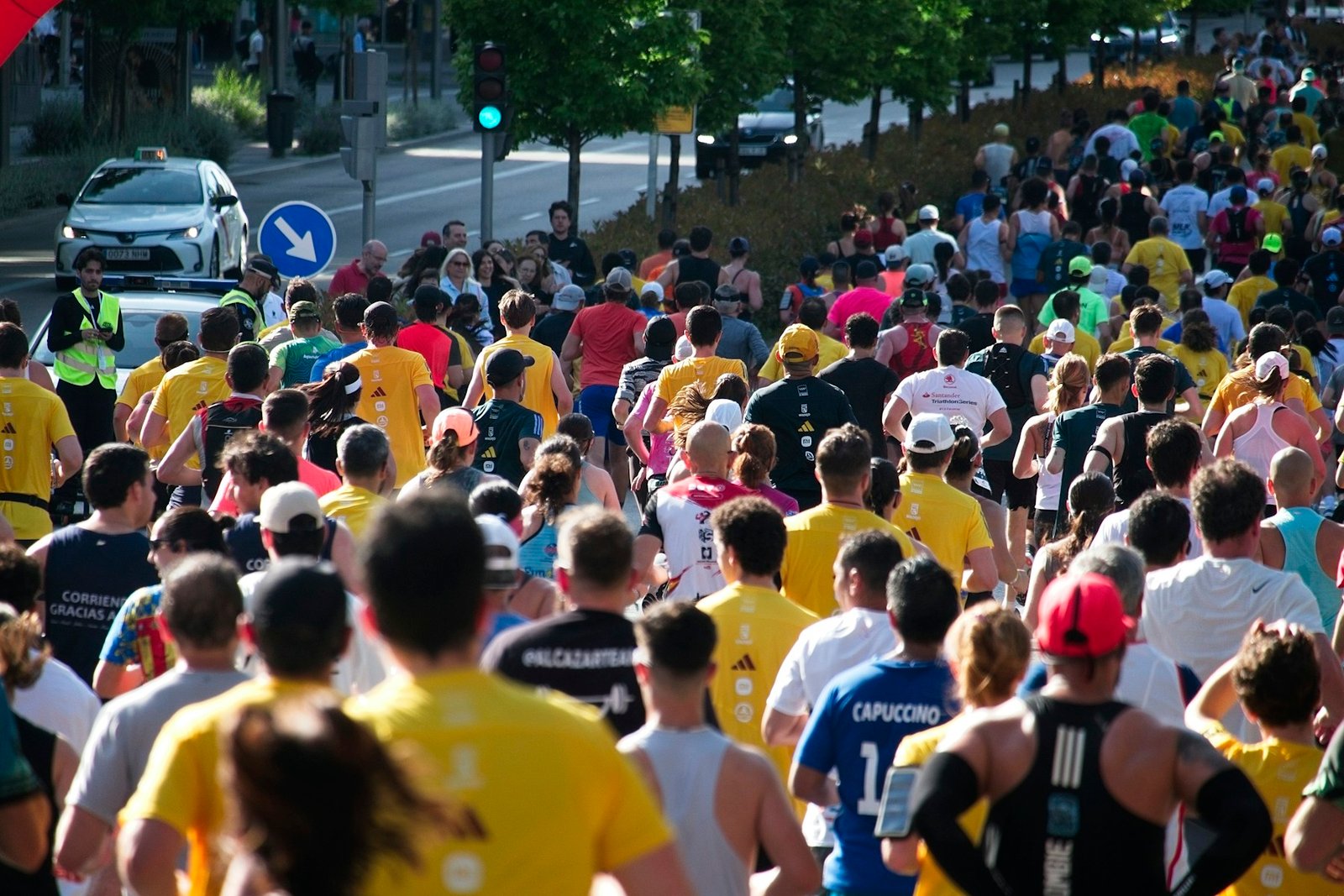
Photo: Miguel A Amutio / Unsplash
START WHERE YOU ARE
You put in the training. You care. And still, doubt can turn up beside you. Recognise what gets in your way, then explore the skills that can help you move towards the running you want.
You’ve trained for this. Now your mind is rehearsing what could go wrong. What would help you arrive with a clearer plan?
02 / AFTER A HARD RESULTOne disappointing run starts to feel like a judgement on all your effort. There is a more useful way to learn from it and look ahead.
03 / FINDING YOUR WAY BACKYou want to return after injury. Confidence takes time, too. Build it around manageable steps within your agreed return plan.
04 / LOSING THE SPARKRunning feels like another obligation. Reconnecting with your own reasons can open the door to enjoyment again.
A missed target can feel personal because running matters to you. That same commitment can give your next chapter direction. Imagine reviewing a difficult run with enough perspective to notice what worked, choose one adjustment and look forward to trying again. That is a response you can begin to practise.
LET YOURSELF LOOK AHEAD
Bring to mind a familiar route or a race you care about. What would you like to experience there? Make the picture specific enough that you can choose something to practise.
You hear the chatter around you and the rustle of race numbers. You feel the familiar fit of your shoes. You check your plan, give yourself one clear instruction and bring your attention to the opening minutes. There is anticipation. There is also something useful to do.
Imagine a familiar moment of doubt. This time, you notice it early. You check your effort and the conditions, then choose your response: settle your pace, adjust your plan or bring your attention to the next manageable section. You are making decisions you can stand behind.
You finish knowing what you practised and what you learned. Perhaps the time pleased you. Perhaps the valuable part was staying patient or making a sensible adjustment. You have something to build on—and a reason to look forward to the next run.
SOMETHING TO TRY TODAY
Take the future you have pictured and give it a practical starting point. Choose one small response to rehearse in your next suitable training session.
Notice the thought, then make space for a useful response. Try: “I’m worried about the start. My first job is to settle into my planned effort.”
Pick one action within your control: check your plan, begin at your planned effort, or prepare your kit. Make it specific.
Afterwards, ask: What happened? What helped? What will I adjust? Give yourself information you can use next time.
Take one question into your next run. What would a worthwhile run look like today, without using pace or distance?
THE RUNNER’S JOURNAL
Four familiar challenges, with practical ways to build confidence, prepare for pressure and reconnect with the pleasure of running.
When “what if?” takes over, bring your attention back to the part of the race you can actually influence.
Read the article ↗How to make room for disappointment, then learn from a result without turning it into your identity.
Read the article ↗Make space for uncertainty and build your return around the plan agreed with your treating professional.
Read the article ↗When every run has to prove something, it may be time to ask what you want running to give you.
Read the article ↗A RUNNER IN YOUR CORNER
Heiko Stribl is a licensed endurance trainer, certified hypnotherapist and qualified swim coach. His own running includes Comrades, Two Oceans and ultra-distance events across Europe. He brings a runner’s experience of preparation, pressure and starting again to his coaching and writing.
Picture a running life with room for a goal that excites you, a setback you can learn from and an ordinary run that leaves you glad you went. The aim is to help you build practical skills that support that experience, one considered choice at a time.
Read more about Heiko’s running and coaching story, or his wider background.
These reflections are for general learning. For an injury or persistent distress, seek appropriate professional support.
ANOTHER WAY TO KEEP MOVING
Heiko’s companion project, From Runner to Efficient Swimmer: Master the Crawl, introduces a step-by-step approach for runners who can already swim 25 metres of front crawl and want a more comfortable, efficient stroke. Explore the method and the forthcoming book.
WHEN YOU WANT TO GO DEEPER
Explore the mental side of running with Heiko Stribl: focus, confidence, resilience and the enjoyment that brought you here.
Take the next step towards the running you have pictured—with ideas to reflect on, responses to practise and a clearer sense of what matters to you.
Find the current edition on AmazonOpens Amazon’s search for the published edition. This site also introduces ideas being developed for the revised book.
Make Every Step Count is for runners who want to give their mental skills the attention they give their physical training. It explores how you meet challenges, respond to setbacks and find meaning in your running.
MAKE
EVERY
STEP
COUNT.